Having courageous conversations ranks in the top 3 coaching areas I come across when I work with people.
Let a process take the strain… we spend a disproportional amount of time worrying about them compared to carrying them out!
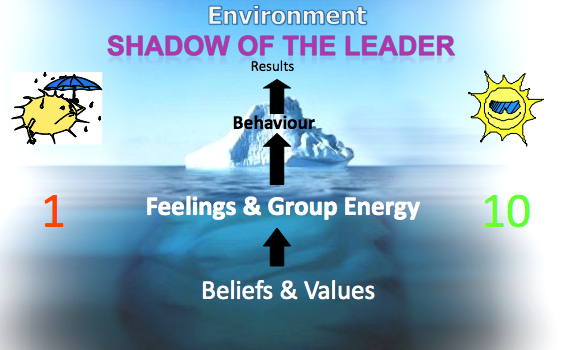
Behaviour is the tip of the iceberg. What drives it lies beneath – how we feel and what we believe. Unfortunately, while we may think we can control the way we feel external factors tend to take control.
However, it is your mind… you can take back the control!
Do you think you believe what you see…. or see what you believe?
Count the number of Fs in the italic sentence below… check out the video to see if you are right.
We are a tad complicated!
FINISHED FILES ARE THE RES
ULT OF YEARS OF SCIENTI
FIC STUDY COMBINED WITH
THE EXPERIENCE OF YEARS
The benefits of being grateful are quite… extraordinary.
You become happier, less envious, exercise more, improve your physical health … and many more cool things happen.
Don’t take my word for it check it out in google land.
You are what you think that”s for sure.
If people are looking to you for direction or inspiration then there is a good chance you are a Leader.
It doesn’t have to be in a business environment… you could be a school football coach, a community head, a business manager or a parent….you are probably a Leader… and therefore you cast a Leadership Shadow.
The world at the moment is as mad as a box of frogs!
Cases of depression & stress are going through the roof.
When you have strong resilience you can cope with stress and adversity… you can bounce back. The world can change as much as it wants…. you’ve got a giant space-hopper!
When it’s low ……the inevitable speed of change wears and tears you down.
Keeping your resilience charged and topped up is essential for a bright and happy future… it’s free, just like air used to be in a garage!
I’ve worked with thousands of people around the world. In most cases their number one goal is to be happy.
Now that’s interesting as happiness is just a thought away…
When you relax your body, you relax your mind. When you relax your mind you tap into the power of the sub conscious.
Sometimes in order to achieve more you have to do less!
Sometimes it’s just good to step off the world and …. let go
Said the candidate I was interviewing for a senior position in a client company.
Brilliant. I love random questions. I was hoping he’d ask things like “What’s the capital of Lithuania?” or “How many wasabi peas can you fit in a smarties tube?” but no.
This man was an ESTJ and ESTJs don’t really do random.
Corporate Governance. Culture. Headcount. Productivity. Profitability. His questions were carefully structured. Ordered. Specific. Relevant. Succinct.
ESTJ is one of the 16 personality types in theMyers-Briggs® Personality Profiling model. Those with a preference for ESTJ (Extraversion – Sensing – Thinking and Judgement) tend to deal in concrete facts.
They often make strong leaders; natural architects of efficient systems and processes. The ESTJ pays great attention to detail. more…
Please forgive me but this week, I am shamelessly promoting the fact that my brother-in-law, Sergeant Christopher Godwin, is running the Amsterdam Marathon on 17 October 2010 in memory of my step-dad.
We lost my step-dad, Valentine Flint, on 11 November last year following a long and harrowing illness triggered by a heart attack, sustained while out go-karting with colleagues from his beloved John Lewis, Oxford Street.
Chris is aiming to raise £1,000 for the British Heart Foundation.
If you are a fan of our website and you want to help, please go to:
Is it me or are the people that enter the Dragons’ Den more deluded than the contestants on X-Factor?
My name is Brian. I’m looking for £100k for a 10% stake in my business. I have invented a cup, which you can fill with tea. And drink from.
Hmmm. So you value your business at £1 million. How many of these cups have you sold?
Four. One to my mum. One to my dad and 2 to my Uncle Harry who drinks a lot of tea and doesn’t have a dishwasher. And they all really love them.
This is a tough market. What makes your cup so special when there are thousand out there already?
Mine is blue. I expect to sell 2 million in the next 6 weeks and they retail at £1.99 each.
Blue cups, eh? Novel. How much do they cost you to make?
Err.. I don’t know. I think it’s about £3 per unit.
Let me tell you where I am, Brian. I’m out.
Mad. The Dragons are often prone to quote the old adage “Turnover is vanity. Profit is sanity.” And they’re right. Well, they would be. They are all multi-millionaires. more…
My brother has just called to say that he has fallen in love with a farm that he has seen for sale.
After 2 minutes of being there, he has already mentally moved in, bought the wellies and worked out how he can raise the half million he’ll need to live The Good Life. And this from a man who took longer to choose which kind of pasty to have, on our recent trip to Cornwall.
It never ceases to amaze me how quickly we decide to spend hundreds of thousands of pounds on a home. You just know, don’t you? Except sometimes, you don’t.
First impressions aren’t always right but the brain is very good at deleting the things you don’t want to see; like the dry rot, the fact that none of your furniture will fit or the crack den next door.
The same applies when choosing people. For jobs, I mean.
Many managers I have spoken to recruit based on gut feeling or first impressions and then are later disappointed that the people they have chosen don’t meet their expectations. more…
I had lured my friends from London and Bath, with promises of the Bournemouth Air Festival, Red Arrows, poignant moments on the beach in silent salute of the Battle of Britain Memorial flight, wing-walkers, parachutists, sky lanterns, fireworks, beach BBQ, cocktails and neon frisbees.
You’d think in mid August, you wouldn’t have to worry about the weather, but no. It poured down. No planes. No fireworks. No Air Festival.
I feel really sorry for the people that organise the festival. It is usually spectacular. Maybe next year.
In the meantime, what to do? Top tips for an impromptu indoor beach barbecue: more…
If your business isn’t doing as well as you’d like, you might want to consider employing my niece, Emily.
The only problem is, you’ll have to wait a while because she’s only nine.
On a recent family holiday (30 of us invaded Cornwall for a week), Em decided that an open-air talent show was in order. And once Em decides something is going to happen, you’d better not get in her way.
First she drew up the accounts, listing the cost of everything she would need in order to determine how much to charge the punters and still make a profit. (When she grows up, she wants to be Sir Alan Sugar).
Then she auditioned to select her acts before producing the tickets which she sold to remaining family members; shrewdly negotiating with the less than enthusiastic by offering a ‘Forces Discount’ to her soldier dad and an ‘OAP discount’ to her great-granddad on the basis that he was, well…really old.
She then recruited and selected her staff; I was to be in charge of hair and make-up while others were given jobs as stage crew, judges, catering etc. (Salaries accounted for).
Next, she cornered me to take her to a supermarket, where she bought huge bags of popcorn, which she then decanted into paper cups to sell at 50p a go in the interval.
Gavin and I have recently been recruiting for client companies, which has caused us to review a number of CVs.
I’m not a big fan of CVs as they rarely tell you anything about the true essence of a person but they can be very funny.
Like the one where a guy listed his hobbies as rugby, lap dancing clubs and nights out with the lads and his only qualification as CSE Grade 2 Needlework…
Or the one where a lady said in her profile that she was a ‘morning person’ and when asked about this at interview said that by the afternoon she was generally too tired to concentrate… more…
That’s enough about ME. Let’s talk about YOU…. What do YOU think of ME?
I’ve just sat through a sales pitch from a software company that wanted to sell me the latest thing in …errr… software. Don’t get me wrong. I invited them in because I am interested in the type of software they offer.
Instead of finding out what I needed, the company in question spent almost the entire meeting telling me why I should use them, who they had worked for before and in what capacity.
Borrrr-inggg.
Hello..if a potential client has invited you in, they already know this stuff. That’s why you’re there. What you need to do is find out about them.
How many times have you been stuck with a terminal bore at a party? What made them boring? Yes, they talked about themselves all night.
And how many times have you met someone and just clicked? Why? Because the other person made an effort to find out about YOU. To listen to YOU.
This is such a simple concept that it still amazes me that salesmen choose to ignore it.
Okay, so you’ve had a simply fabulous idea. It will revolutionise the way the company works, will cost next to nothing and will need hardly any resource to implement.
You’re an ‘extrovert’ in Myers-Briggs® terms so you’ve just got to tell someone. You excitedly share your idea with the people around you, get them to trial it and now they’re hooked too. You are a genius, if you say so yourself.
You bound off to see your ‘introvert’ boss. You’ve got to get this idea off the ground and you’ve gotta do it NOW!
Your boss is busy. You know he’s snowed under with work and you can see he looks stressed. You ignore this because, well, you have an idea that will revolutionise the way the company works and will cost next to nothing to implement and …yada yada. more…
Do you have a team that does not always play to win? Do you feel more like a referee in a fighting ring, some days than a manager?
Don’t worry if you do, the good news is that people are not designed to work in team. Think ‘survival of the fittest’ we have a natural instinct to be competitive in order to survive…so it is completely normal for things to kick off a little!!
At Think, we believe that, whilst rivalry and competitiveness is healthy, you should never excel at another persons loss or expense. To help you unite your team to work together to achieve common goals why not try our Team Skills course.
Teamwork
Some people regard their glass as half full, some half empty. In my case, if I were to sum up my week, I’d say that someone had downed the rest of my wine and made off with the glass afterwards.
Unlike last week, however, where you’ll have noticed my mood was dark; this week I have decided to view the theft of my proverbial glass as a good thing because:
1.) drinking too much is bad for you and;
2.) it gives me an excuse to loiter in the Waterford Crystal department in John Lewis next weekend.
As Francois Lelord says in his wonderful book, ‘Hector and the Search for Happiness’, “Happiness is a way of looking at things”.
I have spent the week overseeing the implementation of a new computer based sales system for a client; with set-back after set-back as the system would not play ball (a bit like the England football team except that we eventually won).
Whilst I could look back at the week, exhausted, with a sense of utter frustration, I am choosing only to see the good in what happened. more…













 Monday 7 September



 Monday 26th July
 Myers-Briggs®
 Teamwork